Nothing broke. Nothing was charged. Here is which of the four separate limits you just hit, and how long you are actually waiting.
You were three prompts from finishing. Then the message appeared, the input box greyed out, and your afternoon acquired a new shape.
The frustrating part is that "Claude" has several limit systems and the wait depends on which one you tripped. Chat sessions run on a five-hour clock. Weekly caps reset at a fixed hour assigned to your account. On the API, nothing resets on a clock at all.
What actually triggers a rate limit
Not message count. That is the first thing to unlearn.
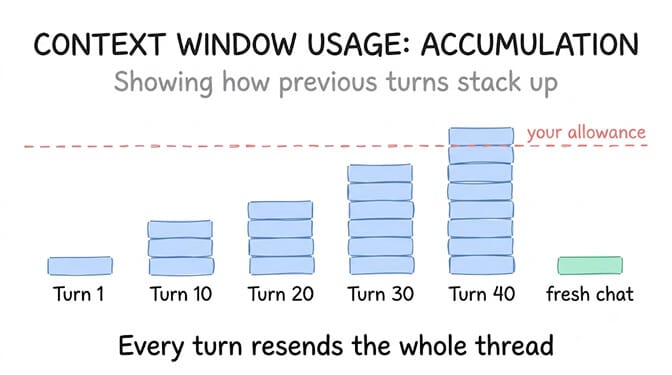
On chat plans, consumption scales with how much text moves through the model: prompt length, attached file size, and critically the length of the conversation so far. Every turn resends the whole thread, so a forty-message conversation costs far more per prompt than a fresh one. Heavier models draw down faster for identical work.
One long conversation will rate limit you faster than ten short ones covering the same ground.
On the API the trigger is a per-minute ceiling on requests, input tokens, or output tokens, returned as a 429. If token cost is also on your mind, our breakdown of real cost per task across providers is the companion piece.
Limits by plan
| Plan | Session allowance | Weekly caps |
|---|---|---|
| Free | Baseline, chat only | Not published |
| Pro | At least 5x Free per session | One weekly limit across all models |
| Max 5x | 5x Pro per session | Two weekly limits |
| Max 20x | 20x Pro per session | Two weekly limits |
| Team | More than Pro per session, applied per seat | Per-seat, admin-managed |
Anthropic does not publish message counts, because the answer depends on your prompt sizes. It does publish your live position: Settings, then Usage, shows progress bars for your session and weekly limits plus the exact reset time.
Weekly caps also moved recently. On September 14, 2026 Claude Code's standard weekly limit settled at 125% of the pre-May baseline, a 17% drop from the summer's temporary boost. We covered that change, and the alternatives when both Claude Code and ChatGPT cut you off, in Claude Code and ChatGPT rate limit alternatives.
Two details people miss. Team and Enterprise caps apply per seat rather than pooling across the organisation. And Cowork and Claude Code need a paid plan, so a Free account never reaches those limits.
API rate limits work on completely different rules
If you are calling the API, forget everything above. Different system, different vocabulary.
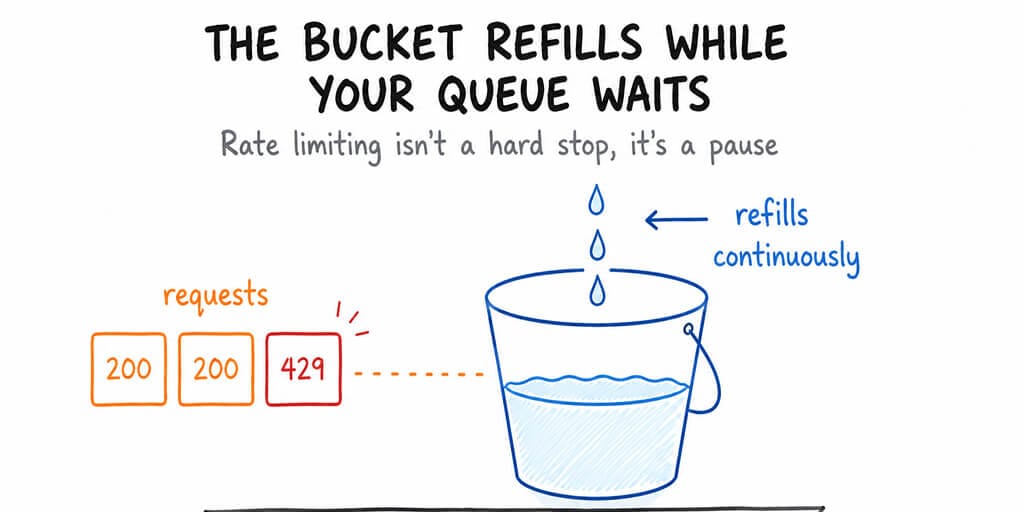
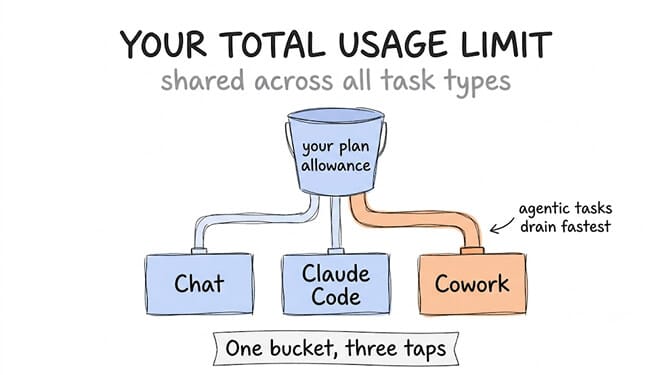
Limits are set per organisation and per model across three dimensions: requests per minute, input tokens per minute, output tokens per minute. Exceed any one and you get a 429 with a retry-after header giving you the wait in seconds.
The tier names changed, and almost every article still has the old ones. There is no Tier 1 through Tier 4. The tiers are Start, Build, and Scale, plus Custom for account-managed organisations, with monthly spend caps of $500, $1,000, and $200,000.
Entry limits are more generous than the old numbers suggest. On Start, Opus 5, Sonnet 5 and Haiku 4.5 each get 1,000 RPM, 2 million input tokens per minute, and 400,000 output tokens per minute. Limits apply per model, so two models can run at full limits at once.
One more thing nobody mentions: input tokens is usually the limit you hit first, not requests.
Cowork compute limits
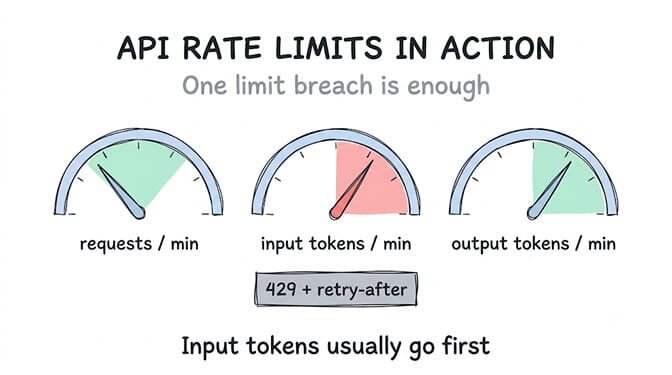
Cowork draws from the same plan allowance as chat and Claude Code. That is the part that surprises people.
An agentic task that reads twenty files, writes three, and reasons through each step consumes far more than a chat message asking the same thing. A long Cowork session quietly eats the capacity you were saving for this evening. There is no separate Cowork meter: one bucket, three taps.
Our guide to Cowork rate limit errors specifically covers the messages you see inside the workspace, and how the September 14 weekly-limit change hits Cowork users.
When does it reset
Three answers, which is why the internet disagrees with itself.
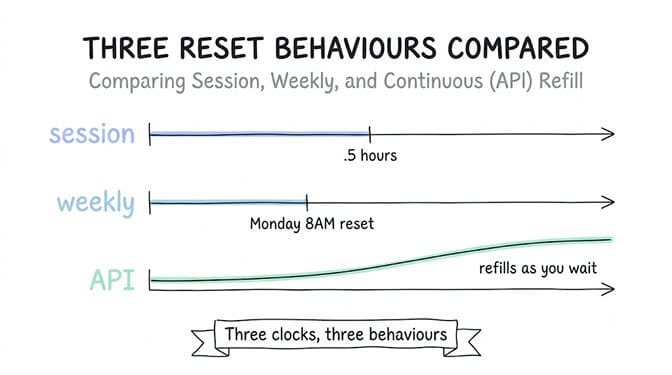
Session limits reset five hours after your session started, not five hours after you hit the wall. Began at 2pm, blocked at 4pm, you are back at 7pm rather than 9pm.
Weekly limits reset at a fixed day and hour assigned to your account. Not Monday. Not your signup date. Check Settings, then Usage.
API limits do not reset on a schedule at all. The API uses a token bucket, so capacity refills continuously instead of all at once. Wait thirty seconds and you have thirty seconds back. That is why retry-after gives you a small number and not "come back in an hour."
Agents hit limits harder than humans do, which is why we spend so much time here. An agent on your own API key, with per-agent cost caps and no surprise ceilings, is the thing we built. Free plan, no card.
Five workarounds that actually work
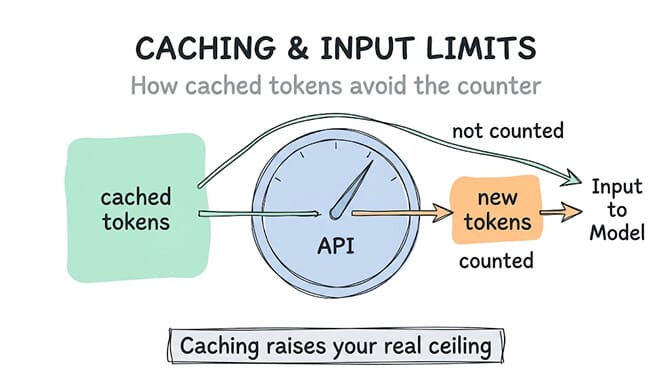
Turn on prompt caching. The biggest one, and almost nobody writing about rate limits mentions it. On most Claude models, tokens read from cache do not count toward your input-token limit at all. With a 2 million ITPM limit and an 80% cache hit rate you can effectively push 10 million input tokens a minute. Cache your system prompt, tool definitions, and long documents.
Start a new conversation. In chat the highest-impact change is not shorter prompts. It is not resending a forty-turn history with every prompt.
Enable usage credits. On Pro, Max, and Team you can keep working past your session limit at standard API rates. Your included allowance still resets on the same five-hour clock.
Move bulk work to the Batch API. Separate limits, including a 200,000-request processing queue, so batch jobs stop competing with interactive traffic.
Back off properly instead of retrying immediately. Read retry-after, add jitter, ramp up gradually. Sharp spikes can trigger acceleration limits even under your ceiling, and a tight retry loop is the fastest way to stay blocked. Our notes on OpenClaw rate limit errors cover how agent frameworks manufacture their own 429s through retry storms.
Is upgrading worth it, plan by plan
Free to Pro ($20 a month): yes, if you use Claude most days. Free is chat only, and a regular user reaches its limit within a few conversations.
Pro to Max 5x ($100 a month): only for heavy Claude Code or Cowork use. Agentic sessions drain the shared allowance far faster than chat, so developers on real projects run out of Pro first. Chat-only users rarely need it.
Max 5x to Max 20x ($200 a month): only if long Claude Code or Cowork sessions are your whole workday.
Before you move up a tier, open Settings, then Usage, and check which limit you actually keep hitting. If it is the weekly cap and not the session limit, a bigger session allowance will not help.
If any of this resonated, give BetterClaw a try. Free plan, one agent, 100 credits a month, no credit card. $49 a month for Pro, $39 on annual. You bring your own API key with zero markup, so your model limits stay yours and cost is visible per agent. And since Anthropic's subscription terms for third-party tools keep shifting (a ban in April 2026, a reversal in May, a paused credit change in June), an API key is the reliable choice for agent work. Full pricing here.
Rate limits feel like punishment. They are closer to a speedometer.
The person who gets limited least often is not the one on the most expensive plan. It is the one who noticed that a fresh conversation costs a fraction of a long one.
Frequently Asked Questions
What does "rate limit reached" mean on Claude?
You have used your allowance for a window that has not finished. Nothing is charged, nothing is deleted, your account is fine. On chat plans the window is a five-hour session or a weekly cap. On the API it means you exceeded requests, input tokens, or output tokens for the current minute.
How is the Claude rate limit different from the API rate limit?
Chat plans meter usage across five-hour sessions and weekly caps, shared between chat, Claude Code, and Cowork. The API meters per minute and per model across requests, input tokens, and output tokens, returning a 429 with retry-after. Separate systems, and a Pro subscription does not include API usage.
How long does a Claude rate limit last?
Session limits clear five hours after the session began, not five hours after you were blocked. Weekly limits clear at a fixed day and hour assigned to your account, visible under Settings then Usage. API limits refill continuously, so a 429 usually clears in seconds.
Is upgrading worth it, or is there a cheaper fix?
Try the free fixes first. A fresh conversation and prompt caching often recover more headroom than a plan upgrade, because both attack the real cost driver, which is context size. Upgrade when you hit limits with short conversations and an efficient setup, not before.
Are rate limits reliable enough to build a product on?
On the API, yes, as long as you treat Claude as an external service with capacity limits rather than a local function call. Read the rate limit headers, back off with jitter, cache aggressively, ramp gradually. Subscription plans are not suitable for production, and their terms for third-party tools have been in flux since April 2026.