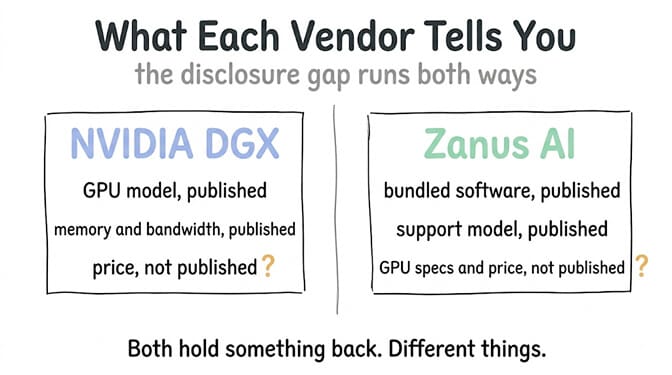
One publishes every spec and no price. The other publishes a price and almost no specs. Here is how to actually compare them, and why the spec sheet is the wrong place to start.
I spent an afternoon trying to build a spec table for this comparison and gave up.
Not because the information was hard to find. Because half of it does not exist. Comparing Zanus AI vs NVIDIA DGX on specifications is impossible, and the reason it is impossible tells you almost everything you need to know about the decision.
Here is the weird part. Once you stop trying to line up memory bandwidth figures, the choice gets much easier to make.
What is Zanus AI? Zanus AI is a Florida company that sells private, on-premise AI servers with local LLMs, a vector store, and 15+ preinstalled business modules. The servers come in three tiers (Prime, Quantum, Enterprise Cluster), every configuration is quoted individually, and the vendor publishes neither server prices nor GPU specifications. Zanus also sells cloud Front Office and Back Office software with a 7-day free trial, but that is a separate product from the servers this review covers.
Zanus AI review: the short verdict
Zanus AI is a good fit for a regulated business with no ML engineers that needs AI inside its own building and wants one vendor to own the whole stack. It is a poor fit for a team that wants to choose its own models, compare hardware on published specs, or build custom agents.
We have not tested a Zanus server ourselves, and this verdict rests only on what the vendor publishes. The biggest weakness is how little of that there is. You cannot judge the hardware until a quote tells you the GPU model and VRAM.
Is Zanus AI an on-premise AI server?
Yes, and it is the product this comparison is about. The server arrives preconfigured (Zanus says delivery takes about three weeks): you connect it to your network, log in, and upload documents. After setup it runs without an internet connection. It is quiet enough for an office, but it wants a standard 50A circuit and can draw up to 6 kW. The vendor also offers a hosted version and cloud software for teams that do not want hardware on site.
Is Zanus AI an AI agent builder?
Not in the usual sense. Zanus does not market an agent builder where you design your own agents, tools, and workflows. It ships fixed modules for chat, document generation, scheduling, client management, web chatbots, and similar jobs, and the vendor configures them for your industry. If you want to build and connect your own agents, you need an AI agent builder, not an appliance.
What each one actually is
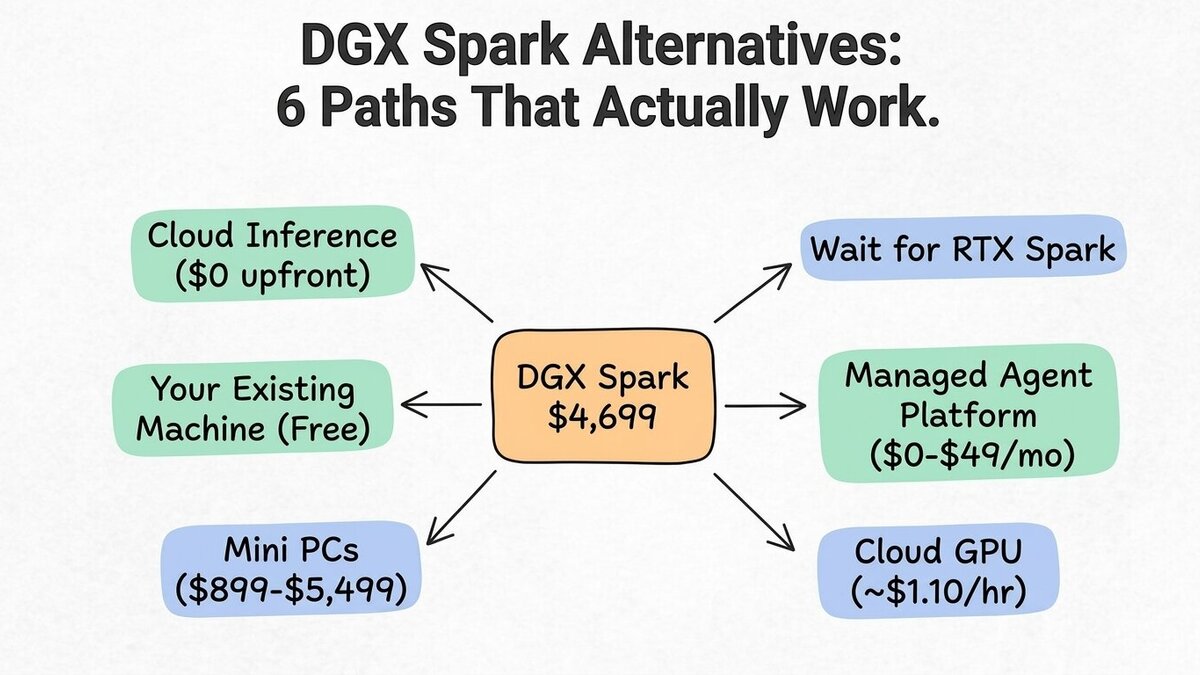
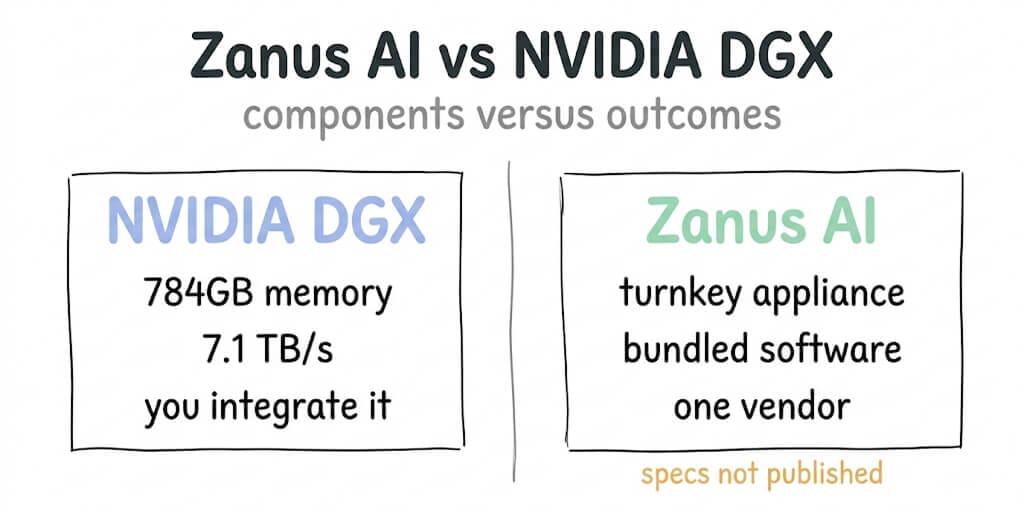
NVIDIA DGX is a hardware family. The DGX Station is the workstation-class machine built on the GB300 Grace Blackwell Ultra Superchip, with 748GB of coherent memory including 252GB of HBM3e at 7.1 TB/s. It ships from OEM partners like Supermicro, Exxact, MSI, ASUS, Dell and HP, and public US listings in late September 2026 ran from $91,812.55 to $99,999 before storage, service and add-ons. The much smaller DGX Spark sits at $4,699 with 128GB of unified memory at roughly 273 GB/s.
You buy compute. What runs on it is your problem, and your opportunity.
Zanus AI sells appliances. Headquartered in Pompano Beach, Florida (Greater Fort Lauderdale), it sells turnkey private AI servers with enterprise GPUs built in, multiple local LLMs, a vector store, and an operating system layer carrying more than 15 pre-installed business modules covering chat, document intelligence, code assistance, spreadsheet automation and more.
Three tiers: Prime for smaller teams, Quantum for multi-user operations with heavier reasoning, and Enterprise Cluster for multi-node deployments across locations.
The pitch is one purchase, no per-seat or per-token fees, no recurring software cost, and no internet connection required. The vendor says a server stores more than 2,000,000 business documents, and describes the architecture as designed to support HIPAA, GDPR and ABA confidentiality requirements because nothing leaves the building.
You buy an outcome. What is inside the box is Zanus AI's problem. (Zanus will also ship a server bare, with just Ubuntu, if you ask, but that is not what it is selling.)
DGX sells you the engine. Zanus sells you the car. Deciding which you need is not a technical question.
A warning about the numbers you will find online
This part matters more than the comparison itself, so I want to be direct.
Search for Zanus AI pricing and you will find confident figures. Roughly $19,900 to $54,900 for an entry configuration. Around $42,000 for a mid-market server. $120,000 to $150,000 for a cluster. Detailed power draw tables, GPU architecture breakdowns, five-year total cost models down to the dollar.
Almost none of it comes from Zanus AI. It comes from a cluster of review sites that appeared in the last few months, and the more of them you read, the less they agree with each other. One describes Zanus as a supply chain orchestration layer that plugs into warehouse control systems and fleet telematics. That contradicts the vendor's own description of a general purpose on-premises AI appliance.
When a site invents a category for a product to fill a keyword, its price table is not evidence.
Zanus AI itself quotes each server against the workload: users, storage, AI capabilities and industry modules, with financing offered. That is normal for enterprise infrastructure and it is not a red flag. What is a red flag is treating a number you found on an aggregator as a budget input.
Get a quote. Ask for the GPU model, the total VRAM, the memory bandwidth, and the specific LLMs that ship on the box. Those four answers turn this comparison from marketing into engineering, and any serious vendor will give them to you on a call.
Where DGX genuinely wins
Model ceiling. The DGX Station's memory pool is designed for trillion-parameter-class work. Unless a Zanus quote comes back with comparable HBM capacity, and nothing published suggests it does, DGX holds models that an appliance in this class will not.
Portability of skills. CUDA is the industry default. Engineers you hire already know it, your cloud instances already run it, and code moves between your desk and your cluster without translation. That has real hiring and continuity value.
Known resale and depreciation. There is a market for NVIDIA hardware. There is not much of one for a proprietary appliance.
Upgrade independence. You can change models, frameworks, and inference engines whenever you want, because nobody bundled them for you.
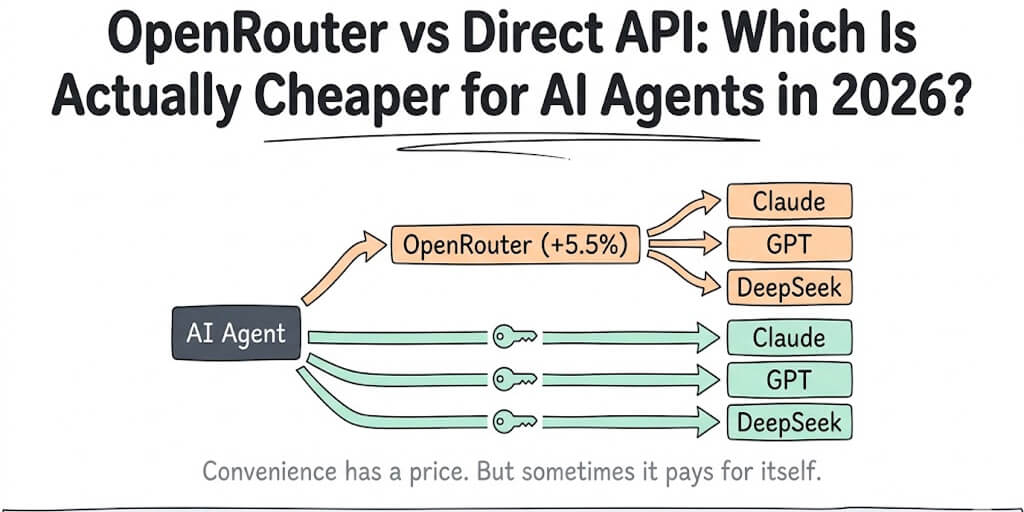
If your work is building agents rather than owning silicon, though, both of these are the wrong purchase. Agent workloads are dominated by orchestration, tool calls, and API round trips, not local FLOPs, which is why we built BetterClaw as managed infrastructure with your own model keys and no inference markup. There is a free plan with one agent, 100 credits a month, and no credit card, which is a faster way to test that theory than a procurement cycle. We covered the wider hardware question in our DGX Spark alternatives breakdown.
Where Zanus AI genuinely wins
Time to value. A DGX Station arrives as capable hardware and an empty prompt. Someone on your team then spends weeks choosing models, standing up a vector store, wiring RAG, building interfaces, and integrating with your CRM and file shares. Zanus ships that layer preinstalled.
Total accountability. One vendor, one phone number, one contract. When the model gives a wrong answer and the storage layer is also acting strange, you are not adjudicating between four suppliers.
Cost predictability. One-time purchase with unlimited users and no token fees is a genuinely different financial shape from metered API billing, and finance teams understand capital assets better than variable inference spend.
Air-gapped operation by default. For legal, medical, defence, and government work where nothing may touch the internet, this is not a preference. It is the requirement, and it is what the whole product is built around.
Neither of these lists is about performance. That is the actual finding.
The question that decides it
Do you have the people?
That is the whole comparison. A DGX Station in an organisation with two competent ML engineers becomes more valuable every quarter as they tune it. The same machine in an organisation without them becomes a very expensive space heater with a multi-week lead time attached.
An appliance is a way of buying the people you do not have, packaged as hardware. That is a legitimate thing to buy. It is also why it costs more per unit of raw compute, and anyone telling you otherwise is selling one or the other.
Ask three things before you sign either quote. Who maintains this in eighteen months. What happens when a better open model ships next quarter, and can we run it. And what does the exit look like if this vendor stops shipping updates.
The third question favours DGX heavily and almost nobody asks it during a demo. If you want to think through the local model question first, our guide to running local LLMs on consumer hardware and our notes on local model hardware for agent workloads both cover what teams actually end up using versus what they buy.
Appliances win on time and accountability. Component systems win on ceiling and exit. Pick the failure mode you can live with.
If your organisation is weighing local AI infrastructure but is not sure which workloads justify it, we offer a free AI readiness audit. We look at your operations, identify where AI agents would actually pay for themselves, and share a clear proposal. If it makes sense to build, we implement it on the BetterClaw platform. No commitment required to get the audit, and it will tell you fairly quickly whether you have a hardware problem or a workflow problem. If you would rather compare software approaches first, our overview of no-code AI agent builders covers that side.
What I would actually do
I would get the Zanus quote. Seriously.
Not because I think an appliance beats a DGX on merit, but because the quote forces the conversation that decides this. Ask for the GPU model and the bandwidth. If the answer is specific and the price is reasonable for what is inside, you have found a company selling integration work at a fair markup, which is a real and useful thing.
If the answer is vague, you have learned something important for free.
The uncomfortable truth underneath this whole comparison is that most organisations shopping for local AI hardware in 2026 are solving a compliance problem, not a compute problem. They need to be able to say the data never left the building. Both of these products can say that. Only one of them requires you to already know how to build the rest.
If you want the wider set of options at the DGX Station price point, our NVIDIA DGX Station alternatives piece compares six of them on memory, bandwidth, and September 2026 pricing, and breaks down what each OEM charges for the Station itself.
Frequently Asked Questions
What is Zanus AI?
Zanus AI is a Florida company headquartered in Pompano Beach, in the Greater Fort Lauderdale area. Its on-premises product is a turnkey server with enterprise GPUs, multiple local LLMs, a vector store, and an operating system with more than 15 pre-installed business modules, sold in three tiers called Prime, Quantum, and Enterprise Cluster. The pitch is one purchase with no per-seat or per-token fees and no internet connection required. It also sells separate cloud Front Office and Back Office software.
How does Zanus AI compare to NVIDIA DGX?
They solve different halves of the same problem. NVIDIA DGX sells compute with published specifications, including 748GB of coherent memory and 7.1 TB/s HBM3e bandwidth on the DGX Station, and leaves the software stack to you. Zanus AI sells a complete stack with the software preinstalled but does not publish detailed hardware specifications, so a direct performance comparison is not possible from public information alone.
How much does Zanus AI cost compared to a DGX Station?
Neither NVIDIA nor Zanus AI publishes a list price. DGX Station pricing comes from OEM partners, with public US listings from $91,812.55 (Supermicro) to $99,999 (MSI) in late September 2026, while Zanus AI quotes its servers by workload: users, storage, AI capabilities and industry modules. Be sceptical of the specific Zanus figures circulating on review aggregator sites, since those are third-party estimates rather than vendor pricing and the sites publishing them disagree with each other on basic product facts.
Is an AI appliance worth it versus buying components?
It depends entirely on whether you have machine learning engineers. An appliance bundles integration work you would otherwise pay salaries to do, which is genuinely valuable for a team without that capability and pure markup for a team that has it. The break-even is usually about eighteen months of one engineer's time, so count your people before you count your FLOPs.
Is a proprietary AI appliance safe to depend on long term?
The security case is strong, since air-gapped operation genuinely removes the data exposure that drives most of these purchases in regulated sectors. The dependency case is weaker and deserves scrutiny: ask what happens when a better open model ships, whether you can run models the vendor did not bundle, and what your exit looks like if updates stop. Standards-based hardware gives you a clearer answer to all three.