I spent two weeks evaluating every major AI agent framework before building our first production agent. Here's what I found, so you don't have to.
My boss walked into standup three months ago and said, "We need to add AI agents to our workflow."
That was it. No spec. No requirements doc. No architecture discussion. Just "add AI agents."
So I did what any developer does. I started researching AI agent frameworks. CrewAI. AutoGen. LangGraph. LangChain. Semantic Kernel. I read documentation. I ran tutorials. I spun up Docker containers. I broke things. Along the way, an AI agent directory like Flaex was useful for scanning what else existed beyond the five names everyone already talks about.
Two weeks later, I had opinions. Strong ones.
Here's everything I learned about the major AI agent frameworks in 2026, so you can pick one and start building instead of spending two weeks in tutorial purgatory like I did.
One correction before we start. When I first published this in May, I listed AutoGen and Semantic Kernel as two separate, live Microsoft options. They aren't anymore: AutoGen is in maintenance mode, and Microsoft folded both into Microsoft Agent Framework, which hit 1.0 in April 2026. The original list also missed three frameworks that matter: Anthropic's Claude Agent SDK, Pydantic AI (2.0 shipped in June), and Google's ADK (2.0 shipped in May). And on September 20, 2026, Google open-sourced AX, a runtime for running agents at scale. This version (updated September 28, 2026) covers all of them, with the current release of each.
The short answer
| If you... | Use |
|---|---|
| Think in roles and want the fastest multi-agent prototype | CrewAI |
| Need precise, stateful control flow with loops and branches | LangGraph |
| Want to build on Claude with the same agent loop as Claude Code | Claude Agent SDK |
| Want type-safe Python and easy model switching | Pydantic AI |
| Build on Google Cloud or Gemini | Google ADK (plus AX to run agents at scale) |
| Run .NET or Azure, or were on AutoGen / Semantic Kernel | Microsoft Agent Framework |
| Need the widest integration catalogue | LangChain |
| Don't want to write or host code at all | A no-code platform like BetterClaw |
How to actually evaluate an AI agent framework
Before diving into specific frameworks, here's what actually matters when you're choosing one. Not the marketing page. The stuff you discover after week two.
Language and ecosystem. Python dominates, and every framework here supports it. If you're a .NET shop, Microsoft Agent Framework is the clear pick. If you want TypeScript, LangGraph, LangChain, the Claude Agent SDK, and Google ADK all support it. Google ADK also ships Java, Go, and Kotlin versions. If you don't write code at all, there's a different category entirely (more on that later).
Agent architecture. Role-based (CrewAI), graph-based state machines (LangGraph), a ready-made agent loop with built-in tools (Claude Agent SDK), typed agents (Pydantic AI), workflow graphs plus multi-agent (Google ADK, Microsoft Agent Framework), or chain composition (LangChain). The architecture determines how you think about your agents. Pick the one that matches your mental model.
Hosting. Does the framework include hosting, or do you bring your own? Most open-source frameworks are BYO. That means a VPS, Docker, monitoring, and maintenance. Factor this into your timeline.
Multi-agent support. Do you need multiple agents collaborating? Or is one agent with multiple tools enough? As we wrote in our orchestration guide, 90% of teams don't need multi-agent orchestration.
Community size. When something breaks at 2 AM (and it will), the community is your lifeline. GitHub stars, Discord activity, Stack Overflow presence, and the volume of tutorials all matter.
Production readiness. There's a gap between "runs in a notebook" and "runs in production handling customer-facing interactions." Some frameworks close that gap. Others leave it entirely to you.
Let's look at each framework through these criteria.
CrewAI: the one that thinks in roles
Architecture: Role-based agents with crew coordination. Language: Python. Current version: 1.15 (September 2026). GitHub: 59K+ stars. Used by: IBM, PepsiCo, DocuSign (CrewAI says 65% of the Fortune 500).
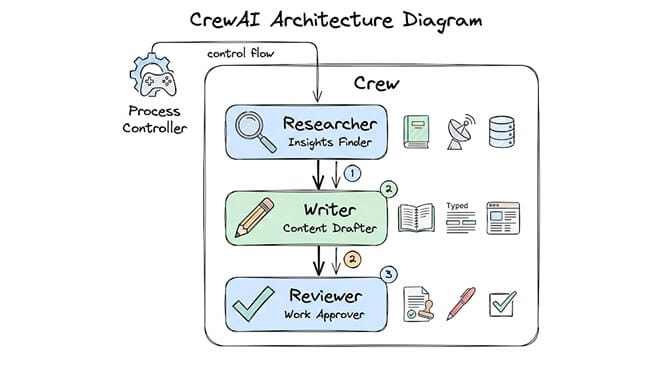
CrewAI's core idea is intuitive: you define agents as roles. A Researcher. A Writer. A Reviewer. Each agent has a backstory, a goal, and specific tools. Then you define a "crew" that coordinates how these agents work together.
This maps naturally to how teams think about delegation. "The researcher finds information, the writer creates the report, the reviewer checks it." If your multi-agent workflow maps to clear roles with handoffs, CrewAI's abstractions make the architecture feel obvious.
Where it shines: Fast prototyping for developers who think in roles. CrewAI's free learning courses make onboarding new team members straightforward. The role-based abstraction is the most intuitive of any framework. IBM and PepsiCo didn't pick it by accident.
Where it struggles: Hosting is not included on the open-source version. You write the agents, you host the agents. Docker, VPS, monitoring, maintenance. Enterprise tier exists but pricing isn't public. Python-only, so if your backend is Node.js or .NET, CrewAI doesn't fit without adding a Python service.
Best for: Teams that want fast prototyping with clear agent roles and are comfortable self-hosting Python services.
We wrote a detailed CrewAI comparison if you want the deep dive on tradeoffs vs no-code approaches.
Microsoft Agent Framework: where AutoGen and Semantic Kernel went
Architecture: Agents plus graph-based multi-agent workflows. Language: Python, C#/.NET. Current version: 1.19 (September 2026; 1.0 went GA in April 2026). Backed by: Microsoft.
If you've read an older framework comparison, you'll see AutoGen and Semantic Kernel listed as two separate Microsoft options. That's out of date. The AutoGen repo is now in maintenance mode ("it will not receive new features or enhancements and is community managed going forward"), and its last release was 0.7.5 in September 2025. Semantic Kernel's README now says it "is now Microsoft Agent Framework". Microsoft calls the Agent Framework the enterprise-ready successor to both, and publishes migration guides from each.
It keeps the best ideas of both parents: AutoGen's multi-agent conversation patterns (agents that debate, critique, and hand off) and Semantic Kernel's enterprise plumbing (plugins, middleware, telemetry, Azure integration). It speaks A2A and MCP out of the box.
Where it shines: The best .NET support of any agent framework, with a matching Python API. Stable APIs with a long-term support commitment, which AutoGen never had. Deep Azure and Microsoft Foundry integration, plus support for OpenAI and other providers.
Where it struggles: It's young as a brand, so tutorials and Stack Overflow answers still mostly reference AutoGen or Semantic Kernel. There's an unmistakable Microsoft ecosystem bias in the integration priorities. If you're not on Azure, there's less reason to pick it over LangGraph.
Best for: .NET shops, Azure-first enterprises, and anyone with existing AutoGen or Semantic Kernel code. If you're on AutoGen today, plan the migration: new features will only land in Agent Framework.
LangGraph: the one for control freaks (compliment intended)
Architecture: Graph-based state machines. Language: Python, JavaScript. Current version: 1.2 (1.0 shipped October 2025). Part of: LangChain ecosystem.
LangGraph models agent workflows as directed graphs with state. Each node is a function. Each edge is a conditional transition. You control exactly how state flows through the system, including cycles (agent loops back to retry) and branches (different paths based on intermediate results).
If you've ever built a state machine and thought "I wish I could do this with LLMs," LangGraph is your framework. If that sentence did not describe you, a no-code AI agent builder gets you to a working agent without the graph.
Where it shines: Precise control over agent execution flow. When you need "if the research agent finds ambiguous results, loop back and search again with refined queries, but only up to 3 times," LangGraph makes that explicit in the graph definition. The JavaScript support means non-Python teams have an option. Complex stateful workflows with conditional logic are where LangGraph outperforms everything else.
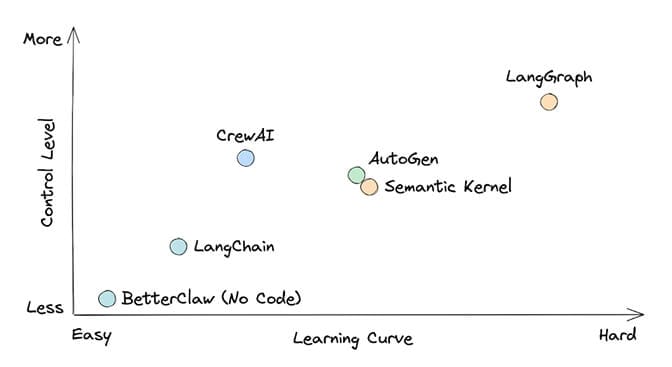
Where it struggles: Steep learning curve. The graph abstraction is powerful but not intuitive for developers who haven't worked with state machines before. LangChain dependency means you inherit LangChain's abstractions (and its baggage). The learning curve is real, and the first week will be slower than CrewAI.
Best for: Teams building complex, stateful agent workflows that need deterministic routing and are willing to invest in the learning curve.
LangChain: the one everyone starts with (and some outgrow)
Architecture: Agent and chain composition. Language: Python, JavaScript. Current version: 1.4 (September 2026). GitHub: 147K+ stars.
LangChain is the 800-pound gorilla of the AI agent ecosystem. Massive community. 1,000+ integrations. More tutorials, blog posts, and examples than any other framework. If you Google "how to build an AI agent," LangChain appears first.
Where it shines: Integration breadth. If you need to connect to an obscure vector database, a specific document loader, or a niche API, LangChain probably has a pre-built integration. The community is enormous. Stack Overflow is full of answers. The "getting started" experience is the smoothest of any framework.
Where it struggles: Abstraction bloat. LangChain wraps everything in multiple layers of abstraction. A simple LLM call goes through chains, prompts, output parsers, and callbacks. When it works, the abstraction saves time. When it breaks, you're debugging through five layers of indirection. Frequent breaking changes between versions cause "framework fatigue." Some teams find themselves fighting the framework more than building their agent.
Best for: Teams that want maximum integration options and don't mind frequent updates. Good for getting started. Some teams eventually migrate the agent logic to LangGraph or a simpler custom implementation once they know what they need. If you're weighing LangChain against its closest data-framework cousin, our LangChain vs LlamaIndex comparison for AI agents breaks down where each one wins.
Claude Agent SDK: the agent loop behind Claude Code
Architecture: A ready-made agent loop with built-in tools. Language: Python, TypeScript. Current version: Python 0.2.160, TypeScript 0.3.283 (September 2026). Backed by: Anthropic.
The Claude Agent SDK (renamed from the Claude Code SDK in September 2025) takes the opposite approach to LangGraph. Instead of giving you primitives to assemble an agent loop, it gives you the one Anthropic already runs in Claude Code: built-in tools for reading and editing files, running commands, and searching the web, plus subagents, sessions, permissions, hooks, skills, and MCP support. The Python package even bundles the Claude Code CLI, so there's nothing else to install.
Where it shines: Time to a capable agent. Tool use, long-running tasks, and context management are solved problems here, not things you build. MCP servers and skills plug straight in. If your agent does work that looks like "read things, run things, write things," it's hard to beat.
Where it struggles: It's built for Claude models only, so it's the wrong pick if you want to swap in Gemini or GPT. It's less suited to rigid, deterministic multi-step workflows than a graph framework. And an agent with shell access needs a sandbox you're comfortable with. Model costs are Claude API rates (Sonnet 5 at $2/$10 per million input/output tokens, Opus 5.5 at $4/$20).
Best for: Teams standardising on Claude who want a production-grade agent loop without writing one. We compare it with LangGraph directly in Claude Agent SDK vs LangGraph.
Pydantic AI: the type-safe one
Architecture: Typed agents with dependency injection, plus an optional graph library. Language: Python. Current version: 2.51 (2.0 shipped June 2026). GitHub: 20K+ stars.
Pydantic AI comes from the team behind Pydantic, the validation library most of the Python AI ecosystem already depends on. Its pitch: agents should feel like normal, well-typed Python. Outputs are validated Pydantic models, dependencies are injected and type-checked, and switching model providers is a one-string change.
Where it shines: Structured output you can trust, and type errors caught by your IDE instead of in production. Model-agnostic from day one. Durable execution, evals (Pydantic Evals), and observability (Logfire) come from the same team. The newer Pydantic AI Harness adds memory, guardrails, sub-agents, and planning as optional capabilities.
Where it struggles: Python only. Multi-agent patterns exist but are less opinionated than CrewAI's crews or LangGraph's graphs. Fewer pre-built integrations than LangChain.
Best for: Python teams who care about correctness, want FastAPI-style ergonomics, and don't want to be locked into one model provider. See our Pydantic AI vs LangChain comparison for the head-to-head.
Google ADK and AX: Google's framework and its new runtime
Google ADK. Architecture: Code-first agents plus a graph-based workflow runtime. Language: Python, TypeScript, Java, Go, Kotlin. Current version: Python 2.10 (ADK 2.0 shipped May 2026).
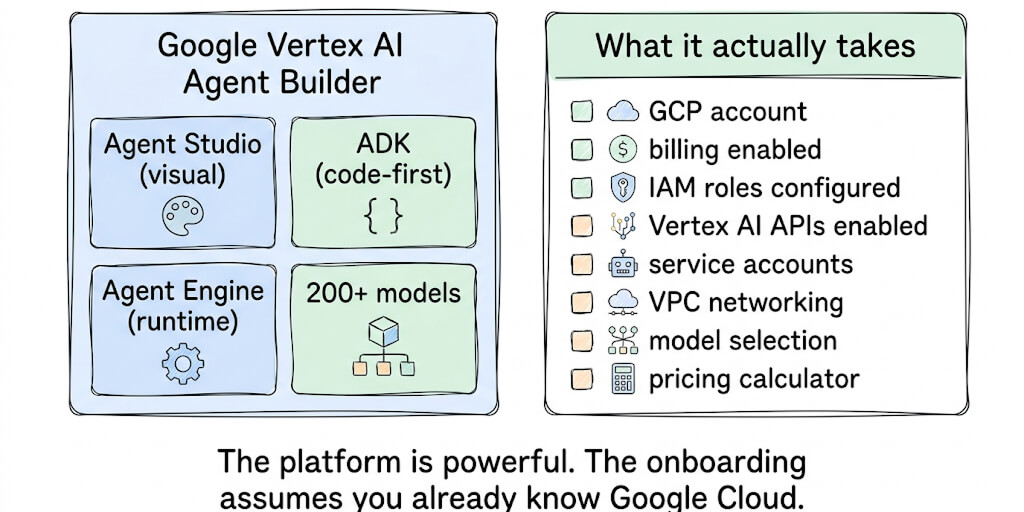
Agent Development Kit is Google's open-source agent framework. It's optimized for Gemini but model-agnostic, and ADK 2.0 added a workflow runtime for deterministic flows (routing, fan-out/fan-in, loops, retries, state) alongside free-form multi-agent setups. It deploys naturally to Vertex AI Agent Engine and Cloud Run. If you're weighing that managed route, our Vertex AI Agent Builder guide covers pricing.
Google AX. Architecture: Kubernetes-style declarative runtime for agents. Language: Go (control plane and CLI). License: Apache 2.0. Current version: 0.3.1.
AX isn't a framework in the same sense as the others on this list, and that's the point. Google open-sourced it with the v0.3.0 release on September 20, 2026 (the launch drew more than 600 points on Hacker News that day). You don't write agent logic in AX. You declare a Task, a Workspace (Git repos, MCP servers, and skill packages pre-wired so agents start warm), and a Model in YAML, then ax apply it. AX sandboxes each task on Kubernetes with CPU and memory limits, can suspend idle agents and resume them where they left off, and lets you ax ssh into a running agent to see what it's doing.
Where it shines: Running lots of agents safely. Isolation, suspend/resume, and cost control are the problems that bite teams after the prototype works, and AX tackles them head-on.
Where it struggles: It's early. The README warns that AX is "in heavy development" and will likely introduce major breaking changes before a stable release. You need a Kubernetes cluster with Google's Agent Substrate installed, which is a real ops commitment.
Best for: Platform teams already on Kubernetes who need to run many sandboxed agents. Everyone else: watch it, don't bet production on it yet.
The master comparison table
Versions and GitHub stars as of September 28, 2026. Every framework here is open source and free; you pay for models and hosting.
| Framework | Language | Architecture | Current version | GitHub stars | Best for |
|---|---|---|---|---|---|
| CrewAI | Python | Role-based crews | 1.15 | 59K | Role-based multi-agent |
| LangGraph | Python, JS | Graph state machines | 1.2 | 42K | Complex stateful flows |
| LangChain | Python, JS | Agent and chain composition | 1.4 | 147K | Max integrations |
| Microsoft Agent Framework | Python, C# | Agents + workflows | 1.19 | 14K (plus AutoGen 61K, Semantic Kernel 29K) | .NET/Azure shops |
| Claude Agent SDK | Python, TS | Built-in agent loop | 0.2 (Py) / 0.3 (TS) | 8K (Python repo) | Claude-native agents |
| Pydantic AI | Python | Typed agents | 2.51 | 20K | Type-safe, model-agnostic |
| Google ADK | Python, TS, Java, Go, Kotlin | Agents + workflow runtime | 2.10 (Py) | 22K (Python repo) | Google Cloud / Gemini |
| Google AX | Go (runtime) | Declarative agent runtime | 0.3.1 (pre-stable) | 12K | Running agents at scale on Kubernetes |
| BetterClaw | No code | Managed platform | n/a | n/a | Non-technical teams |
All of the code frameworks are bring-your-own hosting, monitoring, and security. BetterClaw is managed: hosting, a kill switch, and secret auto-purge are included, with a free plan (1 agent, 100 credits a month, no credit card) and Pro at $49/month for 5 agents.
The framework-free alternative (for when you don't need a framework)
Here's the part that developer audiences usually skip. But stay with me.
Not every AI agent project needs a framework.
If your use case is email triage, lead qualification, customer support, morning briefings, competitor monitoring, or meeting scheduling, you're not building a multi-agent system with custom orchestration. You're configuring one agent with the right tools and instructions.
BetterClaw takes this approach. No Python environment. No Docker. No hosting configuration. You write instructions in plain English, connect integrations via OAuth, set a trust level, and the agent is live in 60 seconds.
What you trade: Customization depth. You can't write custom Python functions for agent tools. You can't define graph-based state machines. You can't build multi-agent orchestration. BetterClaw is single-agent with 200+ verified skills and 25+ OAuth integrations.
What you gain: Zero setup time. Zero maintenance. Managed hosting. Built-in security (secrets auto-purge, isolated Docker containers, one-click kill switch). A free plan that never expires and needs no credit card (our free AI agent builder guide shows the full $0 setup). And the ability for your non-technical co-founder to build their own agent without waiting for engineering bandwidth.
50+ companies including Carelon, Grainger, and Robert Half use BetterClaw for exactly these operational use cases. Not because they couldn't build with frameworks. Because they didn't need to.
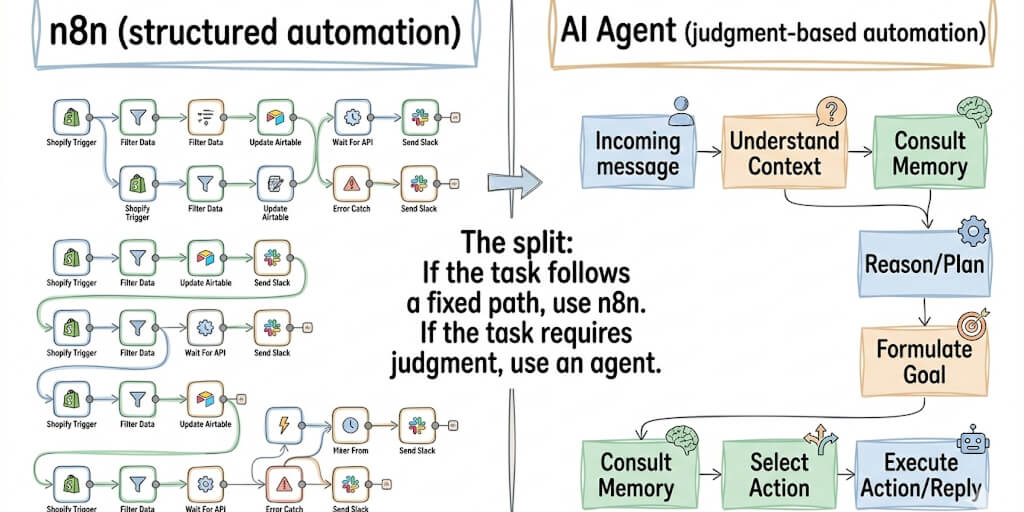
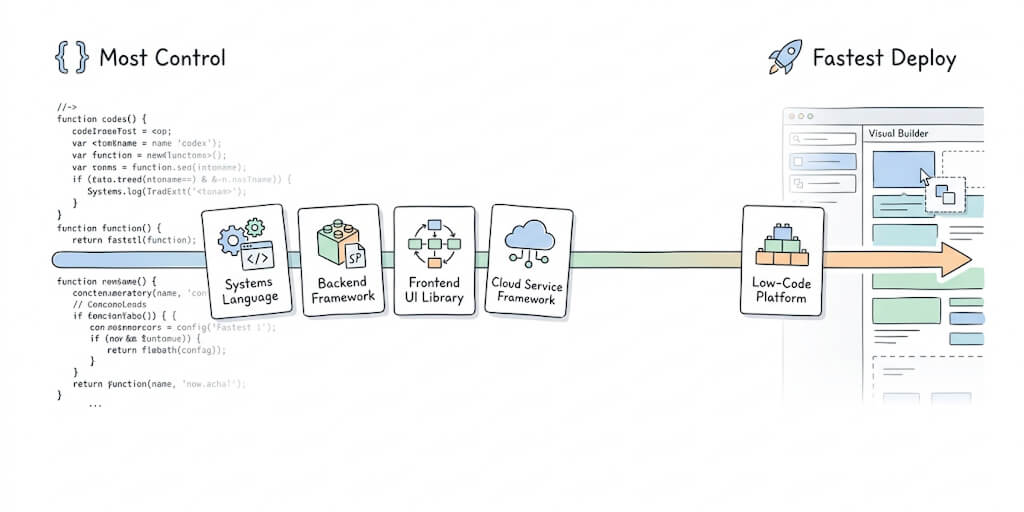
Frameworks are for building custom agent architectures. Platforms are for deploying agents fast. Know which problem you're solving.
If the framework-free path sounds right for some of your use cases, BetterClaw's free plan lets you validate in about 60 seconds. No credit card. $49/month for Pro, which covers 5 agents. Start here.
How to choose (the decision tree)
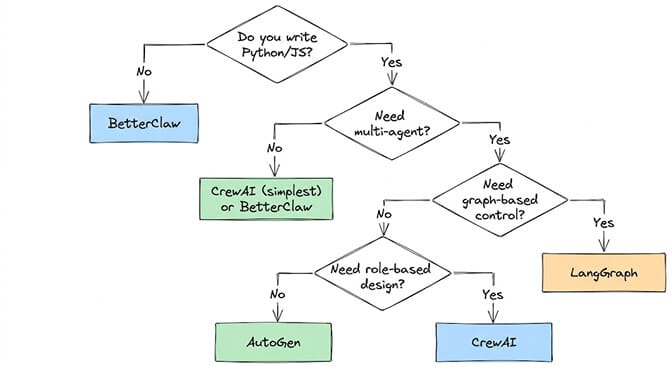
After two weeks of evaluation, here's the decision framework that would have saved me the first twelve days.
Do you need multi-agent orchestration?
If yes, and your agents have clear roles: CrewAI. Fastest prototyping. Most intuitive role-based design.
If yes, and your workflow has complex conditional branching: LangGraph. Steeper learning curve, but maximum control over execution flow.
If yes, and your agents need to negotiate or debate: Microsoft Agent Framework, which inherited AutoGen's conversational multi-agent patterns (don't start new projects on AutoGen itself).
Are you building on one model vendor?
On Claude: Claude Agent SDK. You get Claude Code's agent loop, tools, and context management for free. On Gemini or Google Cloud: Google ADK, with AX on the horizon if you need to run agents at scale on Kubernetes.
Do you care most about type safety and swapping models freely?
If yes: Pydantic AI.
Is your team a .NET shop on Azure?
If yes: Microsoft Agent Framework. It replaced Semantic Kernel and it's good.
Do you want the maximum number of pre-built integrations?
If yes: LangChain. 1,000+ integrations. Most tutorials available online. Be prepared for abstraction complexity.
Do you want the fastest path from "nothing" to "working agent in production"?
If yes: BetterClaw. 60 seconds to deploy. No code, no hosting, no maintenance. $0 free plan. The tradeoff is customization ceiling. If you're specifically comparing managed platforms, see our BetterClaw vs Vertex AI breakdown for enterprise-grade options and BetterClaw vs n8n for the workflow-automation angle. If you'd rather not write code at all, we compared the 12 best no-code AI agent builders and platforms, including our own weaknesses.
Do you genuinely not know yet?
Start with CrewAI. It has the gentlest learning curve among Python frameworks, the most intuitive abstractions, and the largest certified developer community. If you outgrow it, you'll know exactly why and what to switch to.
The real talk on production readiness
Here's what the conference talks and tutorials don't cover.
Every framework on this list runs great in a notebook. The distance from "notebook demo" to "production agent handling customer emails at 3 AM" is measured in weeks, not hours.
What production requires that tutorials skip:
Error handling when the LLM returns unexpected output. Token management so your costs don't spiral. Rate limiting to avoid API throttling. Monitoring to know when the agent breaks. Graceful degradation when a tool call fails. Security for API keys, customer data, and agent permissions. Uptime guarantees for customer-facing agents.
Frameworks give you the building blocks. You build the production layer.
Platforms (BetterClaw, Lindy, Gumloop) give you the production layer out of the box. You configure the agent.
That's the real tradeoff. Not "code vs no-code." It's "build your production stack vs use someone else's." Gartner predicts 40% of agentic AI projects will be canceled by end of 2027, with specification errors (42%) and agent misalignment (37%) as the top failure modes. Most of those cancellations won't be framework failures. They'll be production engineering failures.
McKinsey estimates the addressable value of AI agents at $2.6 to $4.4 trillion. The teams capturing that value aren't debating frameworks. They're deploying agents.
Pick a framework. Build something. Ship it.
The worst decision in AI agent development isn't picking the wrong framework. It's spending six weeks evaluating frameworks and never deploying an agent.
CrewAI, LangGraph, LangChain, Microsoft Agent Framework, the Claude Agent SDK, Pydantic AI, and Google ADK are all capable. BetterClaw is capable for a different set of use cases. They all work. The question is which one matches your team's skills, your use case, and your willingness to manage infrastructure.
If you write Python and want multi-agent control, you have several excellent options. If you write C# and live on Azure, Microsoft Agent Framework is your answer. If you want an agent running in 60 seconds without touching code, BetterClaw is the framework-free path.
Give BetterClaw a shot if the no-code approach fits. Free plan with 1 agent and 100 credits a month. $49/month for Pro with 5 agents. Deploy in 60 seconds. We handle the production layer. See full pricing. Or go install CrewAI and start hacking. Either way, ship something this week.
Frequently Asked Questions
What are the best AI agent frameworks in 2026?
The top AI agent frameworks in 2026 are LangGraph (graph-based state machines), CrewAI (role-based multi-agent, 59K+ GitHub stars), the Claude Agent SDK (Anthropic's Claude Code agent loop), Pydantic AI (type-safe Python), Google ADK (Google's framework, five languages), Microsoft Agent Framework (successor to AutoGen and Semantic Kernel), and LangChain (widest integrations). Google's AX, open-sourced in September 2026, is a runtime for running agents at scale rather than a framework. For teams that don't need a framework, BetterClaw is a no-code AI agent platform with managed hosting at $0/month (free plan) or $49/month (Pro, 5 agents).
Is AutoGen still maintained?
AutoGen is in maintenance mode. Microsoft says it will not receive new features and is community managed; its last release was 0.7.5 in September 2025. New projects should use Microsoft Agent Framework, which went 1.0 in April 2026 and replaces both AutoGen and Semantic Kernel. Microsoft publishes migration guides from each.
What is Google AX?
AX is an open-source (Apache 2.0) orchestrator and declarative runtime for AI agents, released by Google on GitHub (google/ax) with v0.3.0 on September 20, 2026. You describe agent tasks, workspaces, and models in Kubernetes-style YAML, and AX runs each task in an isolated sandbox with suspend/resume. It's pre-stable, requires Kubernetes and Agent Substrate, and complements agent frameworks like ADK rather than replacing them.
How does CrewAI compare to LangGraph and AutoGen?
CrewAI is best for role-based agent design with clear handoffs (researcher, writer, reviewer). LangGraph is best for complex stateful workflows with conditional branching and cycles. AutoGen was built for conversational multi-agent systems where agents debate or negotiate, but it's now in maintenance mode; Microsoft Agent Framework carries those patterns forward. CrewAI has the gentlest learning curve. LangGraph has the steepest but offers the most execution control. All of them require Python (or .NET for Microsoft's) and self-hosted infrastructure. For a hands-on build of the same agent across all three, see our LangGraph vs CrewAI vs AutoGen breakdown, and for the simpler Claude-native path, Claude Agent SDK vs LangGraph.
How long does it take to build an AI agent with a framework vs no-code?
With a Python framework (CrewAI, LangGraph, Pydantic AI): expect 4-8 hours for your first working agent including environment setup, code writing, and basic testing. Production deployment adds days to weeks (hosting, monitoring, security, error handling). With BetterClaw (no-code): about 60 seconds for a working agent. Sign up, connect API key, add integrations via OAuth, write instructions, deploy. The tradeoff is customization ceiling vs deployment speed.
How much do AI agent frameworks cost compared to no-code platforms?
AI agent frameworks (CrewAI, LangGraph, LangChain, Claude Agent SDK, Pydantic AI, Google ADK, Microsoft Agent Framework) are open-source and free. But self-hosting costs $30-100/month (VPS, Docker, maintenance) plus engineering time. CrewAI's enterprise platform is sold separately. BetterClaw: $0/month free plan (1 agent, 100 credits) or $49/month Pro (5 agents). Both approaches add LLM costs via BYOK. The real cost difference is engineering time: frameworks require ongoing maintenance, platforms don't.
Is a no-code AI agent platform good enough for developers?
It depends on the use case. For email triage, support automation, lead qualification, and operational workflows, BetterClaw handles everything a framework would with zero setup time. 50+ companies including Carelon, Grainger, and Robert Half use it. For custom multi-agent architectures, graph-based workflows, or deep LLM customization, a framework gives you more control. Many developer teams use both: frameworks for custom builds, BetterClaw for operational agents that don't need engineering maintenance.
Related Reading
- LangChain vs LlamaIndex — Orchestration vs retrieval, and when you actually need both
- LangGraph vs CrewAI vs AutoGen — The three-way, with a verdict by use case
- Pydantic AI vs LangChain — The type-safe challenger, compared head to head
- BetterClaw vs CrewAI — When a managed agent beats assembling a framework
- CrewAI Alternative — Options if CrewAI's multi-agent model isn't fitting
- OpenClaw vs Hermes — Capability against comprehensibility, and what each bet costs you