A non-technical founder's guide to choosing the right builder, skipping the infrastructure pain, and shipping your first agent before lunch.
It's a Tuesday morning. You've just watched a competitor demo their AI agent that screens job applicants, drafts personalized outreach, and updates the CRM while everyone sleeps. You open Google. You type "build AI agent". The first three results tell you to "just pip install crewai" and "spin up a Docker container with a YAML config".
You close the tab.
You're not stupid. You've built a company. You can read a balance sheet, hire a team, run payroll, ship a product. But somewhere between "pip install" and "kubectl apply", the AI agent space decided that anyone without a Python background should sit this one out.
That's the lie I want to unpack today.
Because in 2026, building an AI agent without writing code is not only possible. It's faster, safer, and in many cases more reliable than the code-first alternative. And if you're a founder, an ops lead, or a non-technical builder who refuses to wait six months for an engineering ticket, this is for you.
What "no-code" actually means in the AI agent world
Let's get definitions out of the way, because the term gets abused.
A no code ai agent builder is a platform where you create an autonomous AI agent through a visual interface. You configure four things: the language model that powers reasoning, the instructions or goal, the skills or tools the agent can call, and the channels it speaks through. The platform handles the rest. The Docker container. The hosting. The memory. The credential storage. The retries when something fails at 3 AM.
You don't see infrastructure. You don't open a terminal. You don't write Python.
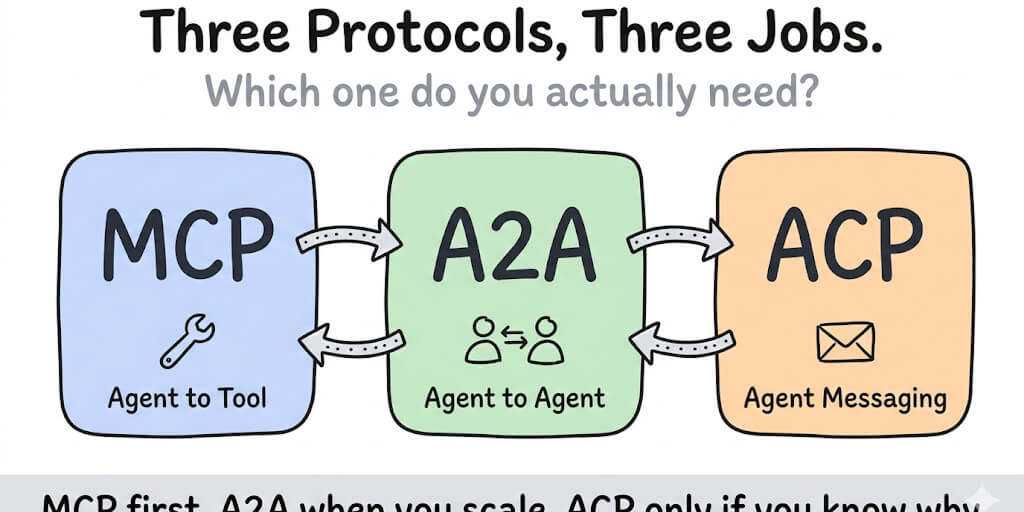
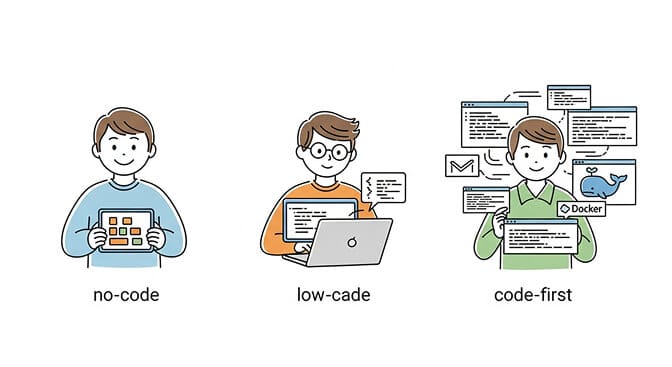
Compare that to a code-first framework like CrewAI or LangGraph, where building the same agent means a Python environment, role definitions in .py files, tool wrappers, a vector database, and a server to host the whole thing. That's not bad. It's just a different job. (We walked through all three paths — no-code, low-code, code-first — in our how to create an AI agent guide.)
Here's the part most articles skip: no-code is not the same as low-code, and low-code is not the same as workflow automation. People keep mashing these together and it confuses the buying decision.
No-code vs low-code vs code-first: the only comparison you need
Here's the breakdown I wish someone had given me when I started.
| Layer | Examples | What you actually do | Time to first working agent | Best for |
|---|---|---|---|---|
| No-code AI agent builder | BetterClaw, Lindy, Gumloop, Relevance AI | Click, configure, connect. Pure visual. | 5 to 60 minutes | Founders, ops leads, marketers, support teams |
| Low-code automation | n8n, Make, Zapier Central | Visual canvas plus optional JavaScript snippets in code nodes | 1 to 4 hours | Technical operators, growth engineers, automation specialists |
| Code-first framework | CrewAI, LangGraph, AutoGen, OpenClaw | Python, YAML, Docker, vector DBs, custom hosting | 1 day to 1 week | ML engineers, backend developers, research teams |
The trap most non-technical founders fall into is choosing low-code thinking it's the same as no-code. It isn't. n8n is fair-code workflow automation with 400+ integrations that combines visual building with custom code, self-host or cloud. It's brilliant if you're comfortable writing a JavaScript snippet to transform some JSON between nodes. If that sentence felt scary, n8n isn't your tool. That's not a knock on n8n. It's about matching the platform to your reality.
Here's the weird part. The code-first frameworks aren't worse. CrewAI is an open-source Python framework maintained by CrewAI Inc., MIT-licensed, with approximately 51,000 GitHub stars as of mid-2026. By January 2026, CrewAI said it had powered around 2 billion agentic system executions in the prior 12 months. That's enormous adoption. But the people running those 2 billion executions know Python. If you don't, that ecosystem isn't for you yet.
Why this matters more than ever for non-technical builders
Three things changed in the last twelve months.
First, the demand for AI agents exploded. Gartner identifies Agentic AI as a top strategic trend for 2026, predicting that by the end of this year, 40% of enterprise apps will feature task-specific agents. That's not a niche. That's every company.
Second, the supply of engineers didn't keep up. There are over 300,000 unfilled AI development positions globally. Organizations cannot wait months to hire specialized talent. If you're waiting for an engineer to free up so they can "look at agents next quarter", you've already lost.
Third, the no-code tools genuinely got good. Platforms have matured to the point where non-technical consultants are building and deploying production agents for client onboarding, customer support, and internal workflows. The no-code label used to mean limited. In 2026, it means different trade-offs, you trade raw customization for speed and accessibility.
That last quote is the whole game. You're not getting less. You're getting different. And for 90% of agent use cases, the trade is wildly in your favor.
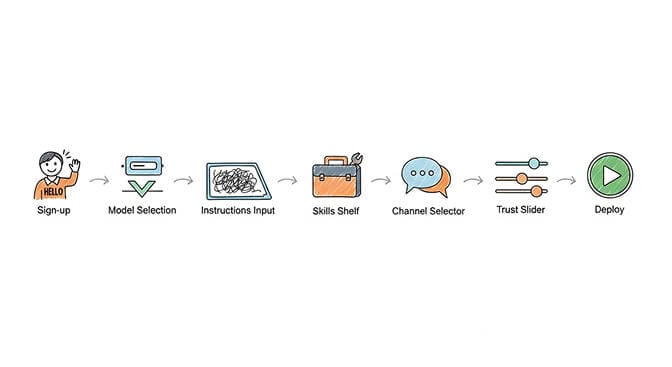
What an actual no-code build looks like, step by step
Let me walk through what building a real agent looks like on BetterClaw. I'm using BetterClaw because that's what we built, but the rough shape applies to any modern visual builder.
Step one. Sign up. No credit card. You land on a dashboard. There's a button that says "New Agent". You click it.
Step two. Pick a model. A dropdown shows 28+ AI providers. Claude, GPT, Gemini, Mistral, DeepSeek, the lot. You paste your API key once. BetterClaw never marks up your inference. You pay the model provider directly. If you don't have an API key yet, the Pro plan gives you $5 in managed credits to try it before you go BYOK.
Step three. Tell the agent what it does. A text box. You write in plain English. "You are an HR screening agent. When a candidate emails careers@mycompany.com, read their resume, check for these three things, score them out of 10, and reply with next steps if the score is above 7. If below 7, file a polite rejection."
That's it. No prompt engineering PhD required. You can iterate later.
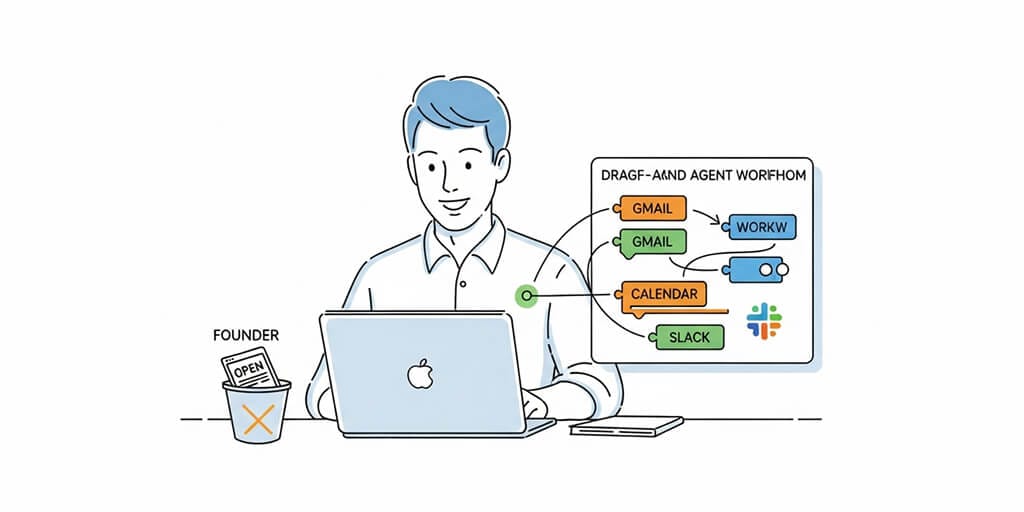
Step four. Add skills. A visual library opens. 200+ verified skills. Click "Gmail" to read and send mail. Click "Google Calendar" to book interviews. Click "HubSpot" to log every candidate. Each click is a one-tap OAuth flow. No webhook setup. No API key hunting. The credentials are encrypted with AES-256 and auto-purge from agent memory after five minutes.
Step five. Pick a channel. Where should this agent live? You see Telegram, Slack, WhatsApp, Discord, Teams, iMessage, Signal, and 8 others. You pick Slack. The agent now responds in your #hiring channel.
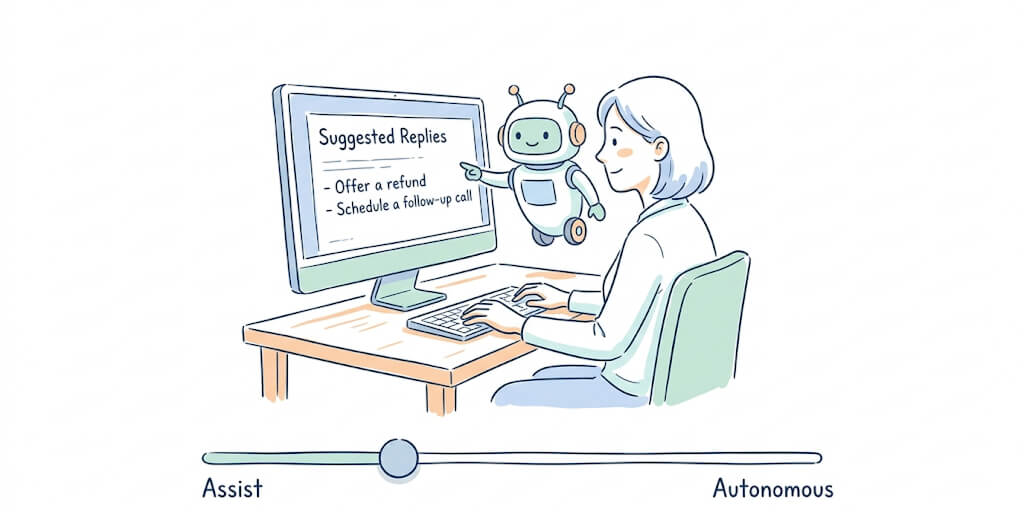
Step six. Set the trust level. This is the part nobody else has. Three options: Intern, Specialist, or Lead. Intern asks before every action. Specialist asks for the risky ones. Lead acts on its own with a kill switch you control. For a brand-new agent, you start at Intern.
Step seven. Deploy. One button. Sixty seconds. Your agent is live, isolated in its own Docker container that you never had to touch, monitored 24/7, with automatic pause if anything weird happens.
Total time? Around ten minutes if you're slow.
If you've ever spent a weekend on requirements.txt errors trying to get a Python script to run, that previous paragraph should make you a little angry. Good. Use the anger.
This isn't theoretical. Michael Chang, an ops lead at a mid-size company, told us this exact story: "I built our HR screening agent in 10 minutes. No developers. No tickets." No tickets is the part that matters. He didn't wait. He didn't pitch a project. He just shipped.
The part nobody tells you about no-code agent builders
Now let me be honest, because most articles in this space are not.
No-code has real limits. If you want to invent a brand-new multi-agent architecture where five agents negotiate with each other using a custom voting protocol, you're going to write code. If you need a specific tool-calling pattern that doesn't exist in any skill library, you're going to write code. If you're building experimental research where you control every token in the context window with custom precision, code-first is your home.
That's not a flaw of no-code. It's just the trade.
For everything else, and "everything else" is roughly 90% of useful business agents, no-code wins on speed, security, and reliability. Lead qualification. Support triage. Document processing. Meeting notes. Sales follow-ups. Internal lookups. Compliance checks. Inventory monitoring. All of these are visual-builder territory.
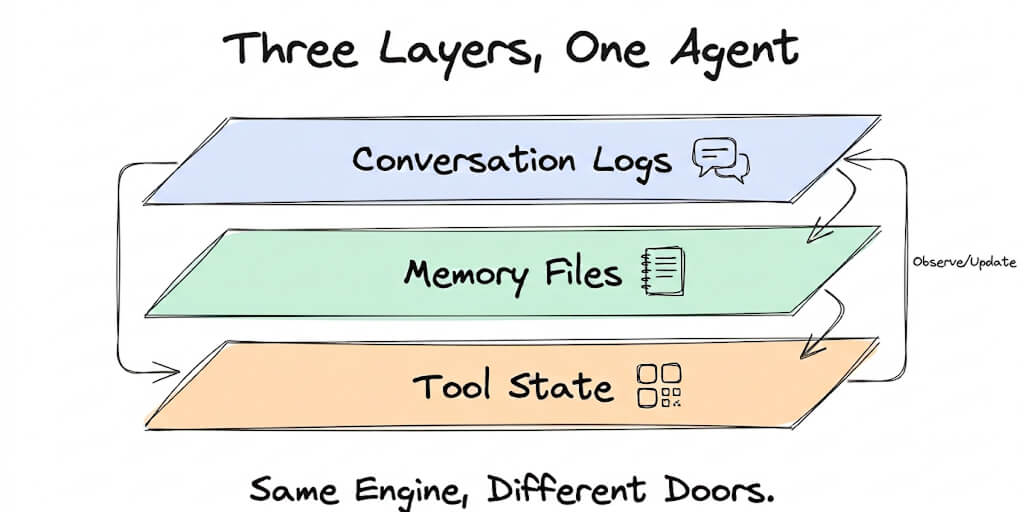
The other thing no one warns you about? The infrastructure invisible to you is doing the hard work. A managed no-code platform isn't just "easier". It's running isolated containers, encrypting credentials, auto-purging secrets, monitoring for anomalies, scheduling cost caps, and quietly absorbing the pain that would otherwise hit your team at the worst possible moment.
That's the unsexy reason no-code is winning. Not the visual builder. The plumbing.
Where most agent projects die
Walk into any company that "tried AI agents" last year and ask what happened. You'll hear the same story.
Someone smart spun up a CrewAI project. Or set up an OpenClaw deployment on a VPS. Or built a LangGraph workflow. The demo was great. Everyone was excited. Then week two arrived.
The API key got committed to a public repo. Someone scraped it. The bill spiked $4,000 overnight. Or the agent went into a loop calling the Gmail API 200 times in five minutes. Or a third-party skill quietly exfiltrated data. Each platform lowers the barrier, but none remove it completely. You will still need to monitor outputs, tweak prompts, and fix integrations when they break. The difference is whether you're monitoring on top of a stable foundation or also fighting the foundation.
This is why the visual builders that ship with security baked in have eaten the market. Verified skills with audit layers. Encrypted secrets with auto-purge. Real-time health monitoring with auto-pause on anomalies. Per-agent cost caps. Trust levels that require human approval before risky actions. None of this is glamorous. All of it is what keeps your agent alive past week two.
How BetterClaw stacks up against the other visual builders
Quick honest tour, because picking a platform matters. (For the deeper side-by-side across every credible builder, see our 7 best AI agent builder platforms breakdown.)
Lindy is solid for sales outbound use cases. Lindy complies with SOC 2 and HIPAA standards, making it ideal for regulated industries. The visual builder is clean. The downside: it's narrower. If your use case isn't sales-shaped, you're paying for things you don't need.
Gumloop is enterprise-friendly with a strong drag-and-drop canvas. Used by Shopify and Instacart. The pricing is steeper, and there's less of a free-tier on-ramp.
Relevance AI is multi-agent ops. Powerful, but more technical than other no-code options. If you're not comfortable thinking in pipelines, the learning curve is real.
n8n is brilliant if you have a technical operator. n8n offers over 400 core nodes, 600+ community nodes, and unlimited custom API integrations in 2026. The flexibility is unmatched. But it's workflow automation first, agent platform second. No persistent memory in the same shape as a true agent platform. No native trust levels. No verified skills marketplace.
BetterClaw sits in a specific spot. Free plan with 1 agent and 500 credits a month, no feature gates, no credit card. BYOK with zero inference markup, which most competitors don't offer. 200+ skills with a four-layer security audit that has rejected 824 malicious skills to date. Secrets auto-purge after five minutes, which we haven't seen anywhere else. And it speaks the OpenClaw skill format, so if you're coming from the open-source world, your existing skill library works here — see the OpenClaw alternatives breakdown for the full migration story.
You can see the full feature comparison and current free plan terms on the BetterClaw homepage. For most non-technical builders, the question isn't "which is best" but "which one gets out of my way fastest".
A subtle thing worth saying out loud
If the idea of writing Python just to get an AI agent running sounds like the wrong use of your time, that's exactly why we built a visual builder. Free plan, 1 agent, 500 credits a month, no credit card, BYOK. Pro is $49 per month if you outgrow it. See the full pricing breakdown if you want the details. The first agent takes about a minute to deploy once you've signed up.
Back to the article.
How to choose the right tool for your situation
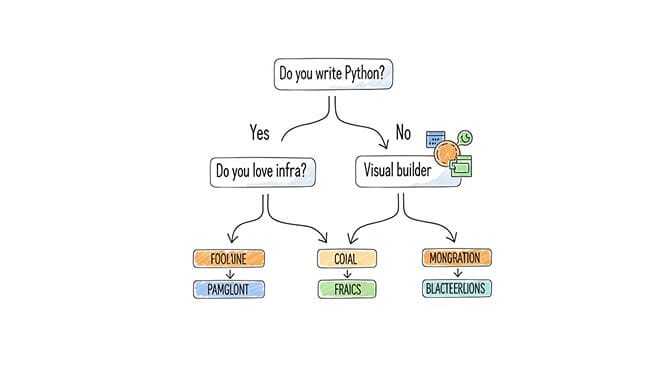
I'll keep this practical. Here's the decision tree I'd use.
You are non-technical, want to ship in under an hour, and don't want to learn anything new. Go no-code. BetterClaw, Lindy, or Gumloop depending on use case shape.
You're technical but allergic to infrastructure work. Still go no-code. The trade-off curve has shifted. The flexibility loss is smaller than the time saved.
You're an engineer building something experimental, novel, or research-flavored. Go code-first. CrewAI for multi-agent prototypes, LangGraph for stateful flows, OpenClaw if you want maximum control and don't mind the security overhead. (Our how to create an AI agent guide covers the full code-first weekend if that's the path you're picking.)
You're somewhere in between, with light technical skills and a strong opinion about ownership. Look at n8n. It's the genuine middle ground.
You're in a regulated industry and need SOC 2 / HIPAA out of the box. Look at platforms that explicitly publish their compliance. Don't take a sales pitch for an answer. Read the trust center.
What the next twelve months look like
A quiet prediction. The line between "no-code" and "code-first" will keep blurring, but not in the way most people expect. The visual builders will keep getting more powerful, absorbing capabilities that used to require code. And the code-first frameworks will keep adding hosted UIs that look suspiciously like no-code.
The winners won't be the platforms with the most features. They'll be the ones that get out of your way fastest while keeping your agent alive, secure, and inside its cost budget.
That's not a marketing line. That's just where the market is heading. In 2025, only 2% of organizations deployed AI agents at scale. The bottleneck wasn't ideas, it was getting pilots into production. The platforms that solve the pilot-to-production gap win the next decade.
The honest closing thought
Here's what I keep coming back to.
Two years ago, building an AI agent meant being a Python developer. Today, building an AI agent means having an idea, ten minutes, and the willingness to click a few buttons. That shift didn't happen because the tech got easier. It happened because thousands of people spent thousands of hours building the infrastructure so you don't have to.
The best thing you can do with that gift is not waste it on the wrong tool.
If any of this resonated, give BetterClaw a try. Free plan with 1 agent and 500 credits a month. $49 per month for Pro. Your first deploy takes about 60 seconds. We handle the infrastructure. You handle the interesting part.
Frequently Asked Questions
What is a no code AI agent builder?
A no code AI agent builder is a platform that lets you create autonomous AI agents through a visual interface, without writing Python, configuring Docker, or managing servers. You configure the model, instructions, skills, and channels through clicks and forms. The platform runs the agent for you and handles security, hosting, and memory.
How does a no-code AI agent builder compare to a code-first framework like CrewAI?
No-code builders trade raw flexibility for speed and accessibility. You can ship an agent in 10 minutes without engineering help, but you give up the ability to invent novel multi-agent architectures or hand-roll custom tool-calling logic. Code-first frameworks like CrewAI or LangGraph give you maximum control but require Python, a hosting setup, and ongoing infrastructure maintenance. For about 90% of business use cases, the no-code trade-off is the better deal.
How long does it take to build an AI agent without coding?
On a modern no-code AI agent platform like BetterClaw, your first working agent takes 5 to 15 minutes from signup to deployment. That includes picking a model, writing instructions in plain English, connecting one or two skills with OAuth, choosing a chat channel, and hitting deploy. More complex multi-step agents with several integrations take 30 to 60 minutes.
How much does a no code AI agent platform cost?
Pricing varies widely. BetterClaw has a free plan with 1 agent and 500 credits a month, no credit card required, with BYOK so you pay the LLM provider directly. Pro is $49 per month and gives you 5 agents plus 12,000 credits a month. Enterprise platforms typically range from $200 to $500+ per month. Self-hosted open-source frameworks are technically free but often cost $50 to $200 per month in VPS, monitoring, and maintenance time.
Is a no-code AI agent builder secure enough for business use?
Yes, if you pick the right one. The platforms worth using ship with isolated Docker containers per agent, AES-256 encryption for credentials, secrets that auto-purge from agent memory after a short window, real-time monitoring with auto-pause on anomalies, and a verified skills marketplace that rejects malicious code. That's a stronger security posture than most teams could build themselves from scratch, especially compared to running a raw open-source framework with unvetted third-party plugins.